Frozen ATPL

From Frozen ATPL to Flight Deck Reality: What Airlines Really Expect From New First Officers

Earning an ATPL theory credit (Frozen ATPL) and stepping into airline operations are not the same milestone. For many newly qualified pilots, the real transition begins after the licence exams, when technical knowledge must be converted into consistent, standardized performance in a multi-crew, highly regulated environment. Airlines do not expect a new First Officer with […]

More Details


Biomathematical Model

Modeling Wakefulness: Biomathematical Models in a Strong FRMS

Fatigue Risk Management Systems (FRMS) increasingly rely on Biomathematical Models to quantify performance risk and inform operational decisions. These models translate physiology—sleep homeostasis, circadian rhythmicity, and sleep inertia—into actionable metrics such as predicted effectiveness or likelihood of lapses. When implemented correctly, model outputs strengthen rostering, dispatch decisions, and investigation of fatigue-related events while maintaining regulatory […]

More Details
Flight Data Monitoring

Powerful Safety Gains: Implementing Flight Data Monitoring under EASA

Flight Data Monitoring under EASA is becoming one of the most valuable tools for modern aviation safety management. By turning routine flight recordings into actionable operational insight, Flight Data Monitoring (FDM) helps operators identify risks early, detect trends, and prevent incidents before they occur. Under EASA oversight, Flight Data Monitoring under EASA is not simply a […]

More Details
FSAG

Fatigue Safety Action Group (FSAG): The Practical Role in Aviation Fatigue Risk Management

Fatigue is a persistent safety hazard in aviation. FSAG is a multidisciplinary team that brings together operators, crew representatives, safety specialists and management to identify, assess and reduce fatigue risk. A well-run FSAG supports a fatigue risk management system (FRMS) and links directly into an operator’s safety management system (SMS). This article explains the FSAG’s […]

More Details
CBTA

Competence-Based Training and Assessment (CBTA) under ICAO: A Proven Path from Theory to Line Operations

Competence-Based Training and Assessment (CBTA) has moved from guidance into operational reality for training organizations worldwide. ICAO’s CBTA concept shifts the focus from hours-based syllabus delivery to demonstrable competencies tied to real-world operational risk. For training managers, instructors and regulators the challenge is pragmatic: how to design, implement and assure CBTA so it meets regulatory […]

More Details
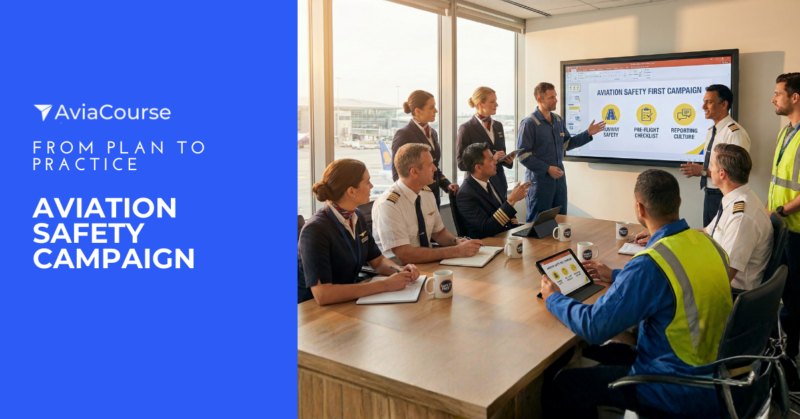
Aviation Safety Campaign

Designing an Effective Aviation Safety Campaign: From Plan to Practice

Aviation Safety Campaign fundamentals An aviation safety campaign should do more than raise awareness — it must change behaviour and reduce operational risk. In aviation, a safety campaign is a structured part of a functioning Safety Management System (SMS) and must align with regulatory expectations and organisational objectives. A well-designed aviation safety campaign helps teams […]

More Details
IOSA Audit findings are important for compliance.

IOSA Audit: 5 Priorities for Effective Corrective Action

The IATA Operational Safety Audit (IOSA Audit) is a benchmark for airline operational safety. When auditors identify issues, they document them in a structured way to guide corrective actions and manage risk. Understanding how IOSA Audit findings are defined and handled helps operators respond proportionately, satisfy regulatory expectations, and maintain IOSA registry status. This article […]

More Details
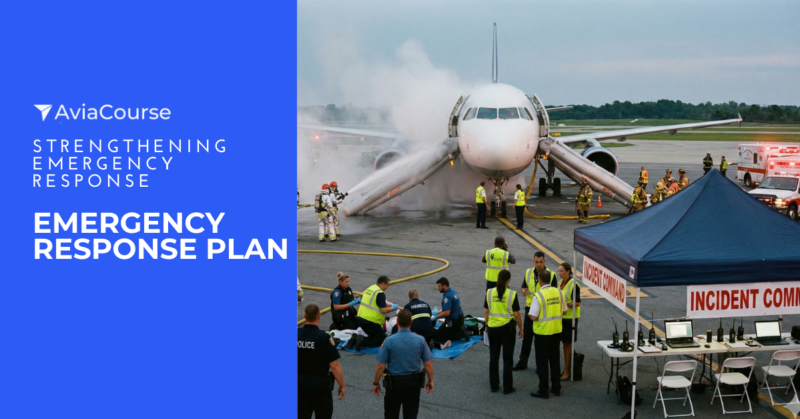
ERP

ERP Training: 5 Core Elements for Strengthening Emergency Response Plans

Emergency Response Plans (ERP) are more than documents on a shelf; they are living procedures that save lives, protect assets, and preserve compliance. For aviation organisations, from airlines to aerodromes and ground handlers, ERP training builds the muscle memory and coordination needed to respond quickly and effectively when an incident occurs. Regulators such as ICAO, […]

More Details
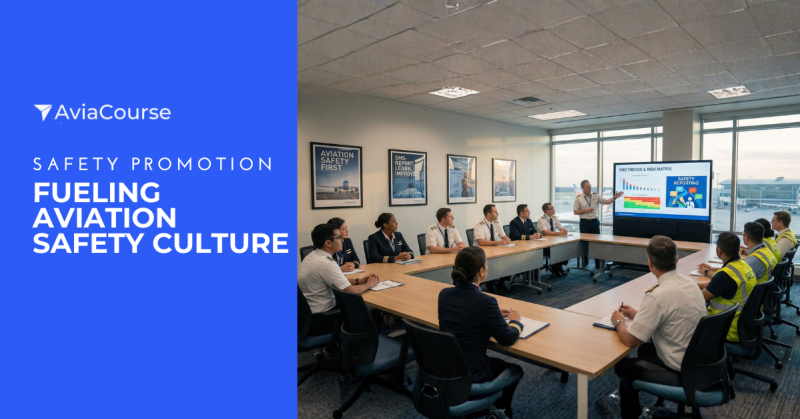
Safety Promotion

Safety Promotion: Fueling a Strong Safety Culture in Aviation

Safety Promotion is the fourth pillar of a Safety Management System (SMS), and it plays a critical role in connecting safety policy, risk management, and safety assurance through people and communication. While documented procedures, risk registers, and audits are essential elements of an SMS, lasting safety performance ultimately depends on human behaviour, shared values, and […]

More Details