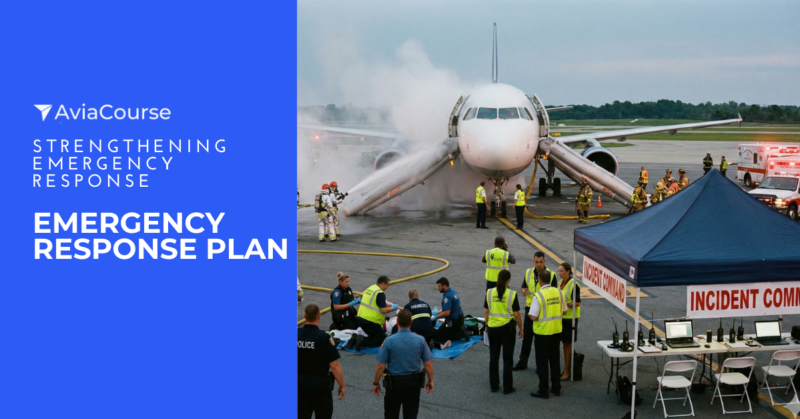
Emergency Response Plans (ERP) are more than documents on a shelf; they are living procedures that save lives, protect assets, and preserve compliance. For aviation organisations, from airlines to aerodromes and ground handlers, ERP training builds the muscle memory and coordination needed to respond quickly and effectively when an incident occurs. Regulators such as ICAO, EASA and national authorities require operators and aerodromes to maintain and exercise ERPs, and auditors pay close attention to documented training and exercises. This article explains why focused ERP training matters and how to design practical programs that meet regulatory expectations and improve real-world outcomes.
Why ERP training matters
ERP training translates policies into practiced actions. During an emergency, clear roles, timely communication and coordinated response reduce confusion and risk. International standards, including ICAO provisions applicable to operations and aerodrome emergency planning, expect organisations to test and refine their ERPs through regular exercises and training. Regulators look for evidence that personnel know their responsibilities, that communications with authorities and emergency services work, and that post-event reviews lead to improvements. Well-structured training improves situational awareness, shortens response times, and strengthens relationships with local emergency services and stakeholders.
Designing effective ERP training
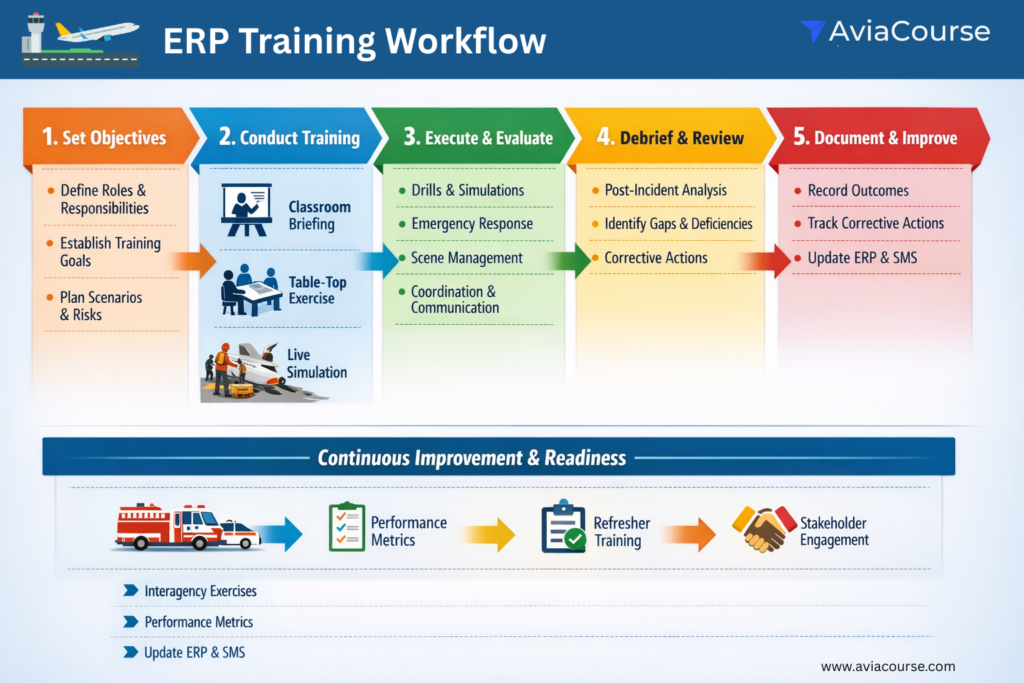
Effective ERP training is practical, role-specific and repeated. Start by defining clear objectives for each training session: what decision, action or coordination skill must be demonstrated? Use a mix of classroom briefings, table-top exercises and live simulations to cover theory, communications and hands-on tasks. Table-top exercises are efficient for command and coordination testing; simulations and full-scale exercises validate equipment, on-scene procedures and inter-agency links. Training must include notification procedures, passenger handling, media management, medical coordination and recovery actions such as returning to service or site restoration. Integrate Emergency Response training with your Safety Management System so lessons feed into hazard logs and corrective actions.
Core elements to include in each ERP training cycle are:
- Defined roles and responsibilities;
- Communication and notification drills with internal teams and external agencies;
- Practical handling of injured persons, evacuation and survivor support;
- Scene control, safety and resource management;
- Post-incident reporting, debrief and corrective action tracking. Keep records of attendance, scenarios used, deficiencies found and follow-up actions to demonstrate compliance during audits and to support continuous improvement.
Sustaining readiness and meeting regulatory expectations
Readiness is maintained through scheduled refreshers, lessons-learned integration and stakeholder engagement. Establish a realistic training cadence: annual full-scale exercises, more frequent table-top exercises and targeted refreshers after staff changes or procedural updates. Involve external agencies—fire, medical, police and air traffic services—in exercises to validate inter-agency interoperability and mutual aid agreements. Use objective performance measures such as response time, accuracy of notifications and completeness of checklists to evaluate effectiveness. After every exercise or event, conduct a structured debrief and ensure corrective actions are assigned, tracked and closed within defined timelines. Maintain documentation that maps training outcomes to regulatory requirements and to your SMS risk controls.
Practical tools improve training quality: scenario templates matched to credible risks, simple checklists for on-scene commanders, recorded radio communications for after-action review, and mobile notification systems to test alerting chains. Consider using video or tablet-based briefings for consistency and to support just-in-time refreshers. Finally, foster a culture that values preparedness: recognise teams that achieve high performance in exercises and encourage open reporting of gaps without blame so that improvements are timely and effective. For further guidance on regulatory references and recommended practices, see applicable ICAO annexes and national regulations or visit our resources.
Conclusion
ERP training closes the gap between plans and performance by creating predictable, practiced responses to emergencies. Regular, evidence-based exercises that involve internal teams and external partners ensure compliance and build real capability. Keep training frequent, measurable and integrated with your SMS to maintain readiness and continuously reduce risk.


Comments Off on ERP Training: 5 Core Elements for Strengthening Emergency Response Plans