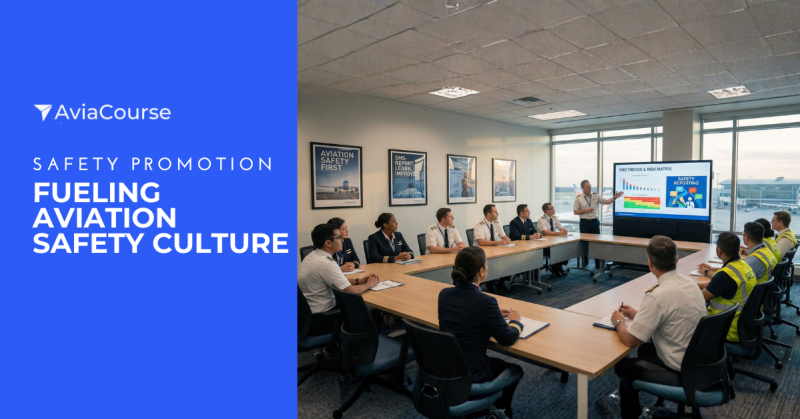
Safety Promotion is the fourth pillar of a Safety Management System (SMS), and it plays a critical role in connecting safety policy, risk management, and safety assurance through people and communication. While documented procedures, risk registers, and audits are essential elements of an SMS, lasting safety performance ultimately depends on human behaviour, shared values, and everyday decision making. For this reason, international standards such as ICAO Annex 19 and the Safety Management Manual (Doc 9859) make Safety Promotion an explicit requirement. A resilient safety culture reduces errors, improves reporting, and strengthens an organisation’s ability to manage risk proactively. This article explains Safety Promotion in plain language and outlines practical steps that organisations can apply immediately.
What Safety Promotion means and why it matters
Safety Promotion focuses on building awareness, competence, and trust at every level of an organisation. It includes training, communication, leadership engagement, and encouragement of hazard and occurrence reporting. At its core, Safety Promotion ensures that people understand how the SMS works, why it matters, and how they personally contribute to safety outcomes.
Regulators expect organisations not only to have an SMS on paper, but also to actively promote it. Staff must know how to report hazards, feel confident that their reports will be treated fairly, and believe that management genuinely values safety over competing pressures. When Safety Promotion is effective, employees are more likely to speak up, make safer decisions, and follow procedures even when under operational pressure.
A strong Safety Promotion program supports continuous learning. Increased reporting provides better safety data, which allows organisations to identify trends, manage risks earlier, and prevent incidents before they escalate. Over time, this creates a positive feedback loop where trust, reporting, and improvement reinforce one another.
Practical steps to implement Safety Promotion
Begin by clearly defining the objectives of your Safety Promotion activities and align them with your SMS documentation. Ensure staff know what risks the organisation is prioritising and why. Develop a simple training plan that covers core SMS concepts, how to report hazards, and what happens after a report is submitted. Practical classroom sessions should be supported by short on-the-job briefings, refresher modules, and quick reference materials that are easy to access.
Communication should be frequent and varied. Use short safety bulletins, toolbox talks, posters in common areas, and digital messages to keep safety topics visible. Management must be visible and consistent in their messages: when leaders attend briefings, respond to reports, and allocate resources for risk reduction, employees take safety seriously. Promote a just culture by explaining the difference between honest mistakes and wilful violations, and by demonstrating that reporting will not lead to unjust punishment.
Make measurement part of your Safety Promotion plan. Use simple indicators such as number and quality of reports, attendance at training, and results from short safety culture surveys. Share results openly and describe actions taken so staff see that their input leads to change. Integrate Safety Promotion into routine processes by including it in line manager responsibilities, performance reviews, and contract briefings for contractors.
Finally, make learning visible. When an investigation or review leads to an improvement, communicate the story: what happened, what was learned, and what changed. Stories make abstract concepts real and encourage others to contribute. For regulatory alignment and guidance, consult documents such as ICAO Annex 19 and the ICAO Safety Management Manual (Doc 9859) for expectations and recommended practices.
Conclusion
Safety Promotion turns policy into practice by educating staff, encouraging reporting, and reinforcing leadership commitment. Start with clear objectives, visible leadership, and regular communication. Measure progress and close the feedback loop so people see that their reports make a difference.
Check out our Safety Management System (SMS) course to learn more about Safety Promotion from our expert instructors!


Comments Off on Safety Promotion: Fueling a Strong Safety Culture in Aviation