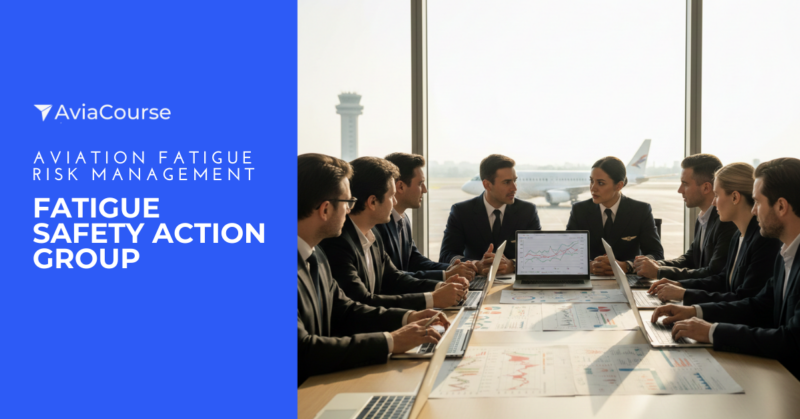
Fatigue is a persistent safety hazard in aviation. FSAG is a multidisciplinary team that brings together operators, crew representatives, safety specialists and management to identify, assess and reduce fatigue risk. A well-run FSAG supports a fatigue risk management system (FRMS) and links directly into an operator’s safety management system (SMS).
This article explains the FSAG’s core responsibilities, gives practical guidance for running meetings and demonstrates how FSAG outputs should be aligned with international guidance such as ICAO’s SMS and FRMS material and relevant EASA and FAA guidance.
What an FSAG does
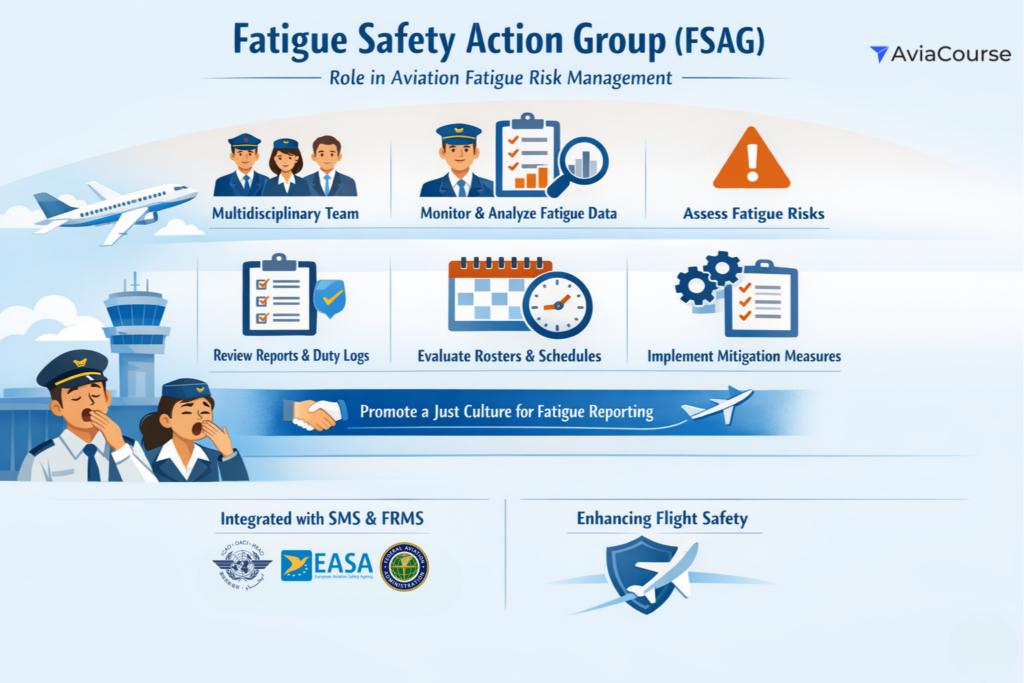
This group operates as the focal point for fatigue-related safety work within an operator. Its responsibilities range from monitoring data to recommending operational changes.
Key activities include reviewing fatigue reports and duty records, analysing trends in sleep and duty patterns, and assessing the effectiveness of mitigation measures such as roster changes or controlled rest.
The group also evaluates new routes, seasonal schedule changes or roster experiments for potential fatigue impact before wide implementation.
Importantly, it promotes a just culture for fatigue reporting so that crew feel safe to report tiredness without fear of punitive action.
For additional aviation fatigue awareness content, you can also explore safety-focused training articles on the AviaCourse blog:
How to run an effective FSAG
Effective FSAGs are structured, evidence-driven and inclusive. First, create a clear charter that defines membership, responsibilities, meeting cadence and decision authorities. Membership should include operational representation (pilots and cabin), safety specialists, rostering planners, occupational health or human factors experts and a data analyst where possible. Use multiple data streams: voluntary reports, operational events, duty and rest records, fatigue hazard logs, and where available, biomathematical fatigue model outputs. At each meeting present a concise data pack, prioritise issues using risk criteria, and document agreed actions with owners and target dates.
Ensure follow-up at subsequent meetings so that proposed mitigations are measured for effectiveness. Communication is essential: publish clear, non-technical briefings for crews about changes and why they were made, and maintain confidentiality when handling personal health information. If needed, escalate unresolved or high-risk items to senior management or the SMS safety committee for resources or regulatory liaison.
Integration with SMS and international guidance
The FSAG should not work in isolation: its outputs must feed into the operator’s SMS so that fatigue risks become part of overall enterprise risk management. International guidance from ICAO and recognised national authorities advises that fatigue management be systematic and data-led. Align FSAG work with ICAO Annex 19 principles and FRMS guidance such as ICAO Doc 9966, and consider EASA and FAA FRMS materials when applicable to your operations. Maintain clear records of meetings, decisions and performance indicators to demonstrate due diligence to regulators and auditors. Where formal FRMS approval is in place, ensure the FSAG fulfils any regulatory oversight requirements and cooperates with audits and periodic reviews.
To make FSAG work practical, follow these steps: define a charter and membership, agree data sources and KPIs, meet regularly with a concise agenda, document actions with owners and deadlines, and measure the effect of mitigations. Embed fatigue education in training programs and keep communication channels open with crew representatives and management. Use external guidance when interpreting complex situations and consult regulators early if changes may affect approvals. The FSAG’s role is to convert data into action that measurably reduces fatigue risk.
For professional development in aviation safety and fatigue risk management, AviaCourse offers ICAO- and EASA-aligned training courses designed to help operators implement effective Safety Management Systems and Fatigue Risk Management Systems.
Conclusion: A functioning FSAG turns fatigue awareness into measurable safety improvements through structured review, practical interventions and clear follow-up. Integrate FSAG outputs with your SMS and align with ICAO, EASA and FAA FRMS guidance to show regulatory compliance and continuous improvement. Regular meetings, rigorous documentation and open communication ensure the FSAG delivers safer operations and a stronger safety culture.
For further insights into aviation fatigue risk and operational safety concepts that align with FSAG practices, consider reading the SafeJets article on the Window of Circadian Low (WOCL) and its implications for fatigue risk management on the SafeJets blog.


Comments Off on Fatigue Safety Action Group (FSAG): The Practical Role in Aviation Fatigue Risk Management